
Universal HbbTV MediaSync App
The single, open-source companion app for all broadcasters to enable perfectly synchronized second-screen experiences.
Available now on Android and Meta Quest
Coming soon on the
App Store
Get it on
Google Play
Meta Quest on the
Horizon Store
Powered by
Supported by
Experience it in Seconds
Enjoy synchronized second-screen content effortlessly.
Step 1: Discovery
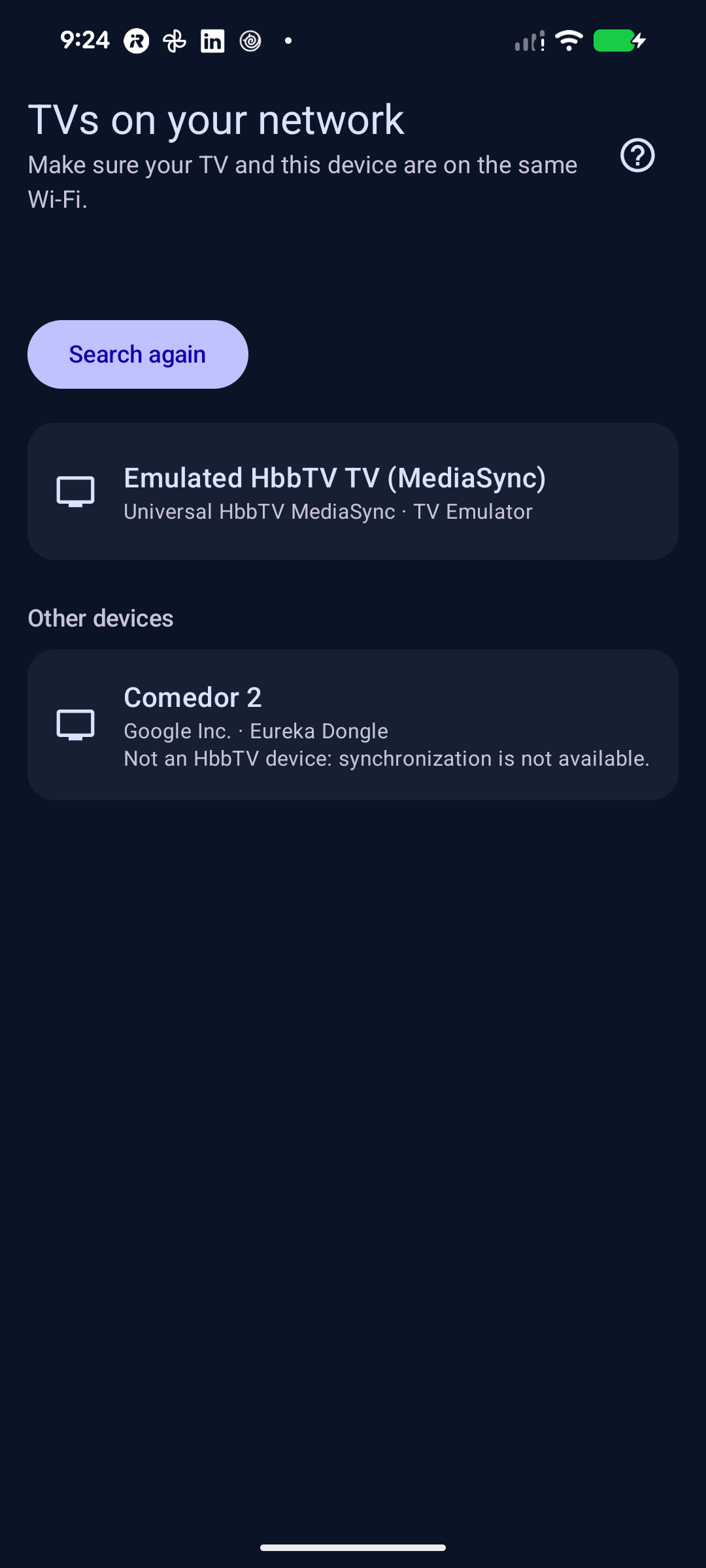
Step 2: Choose Track
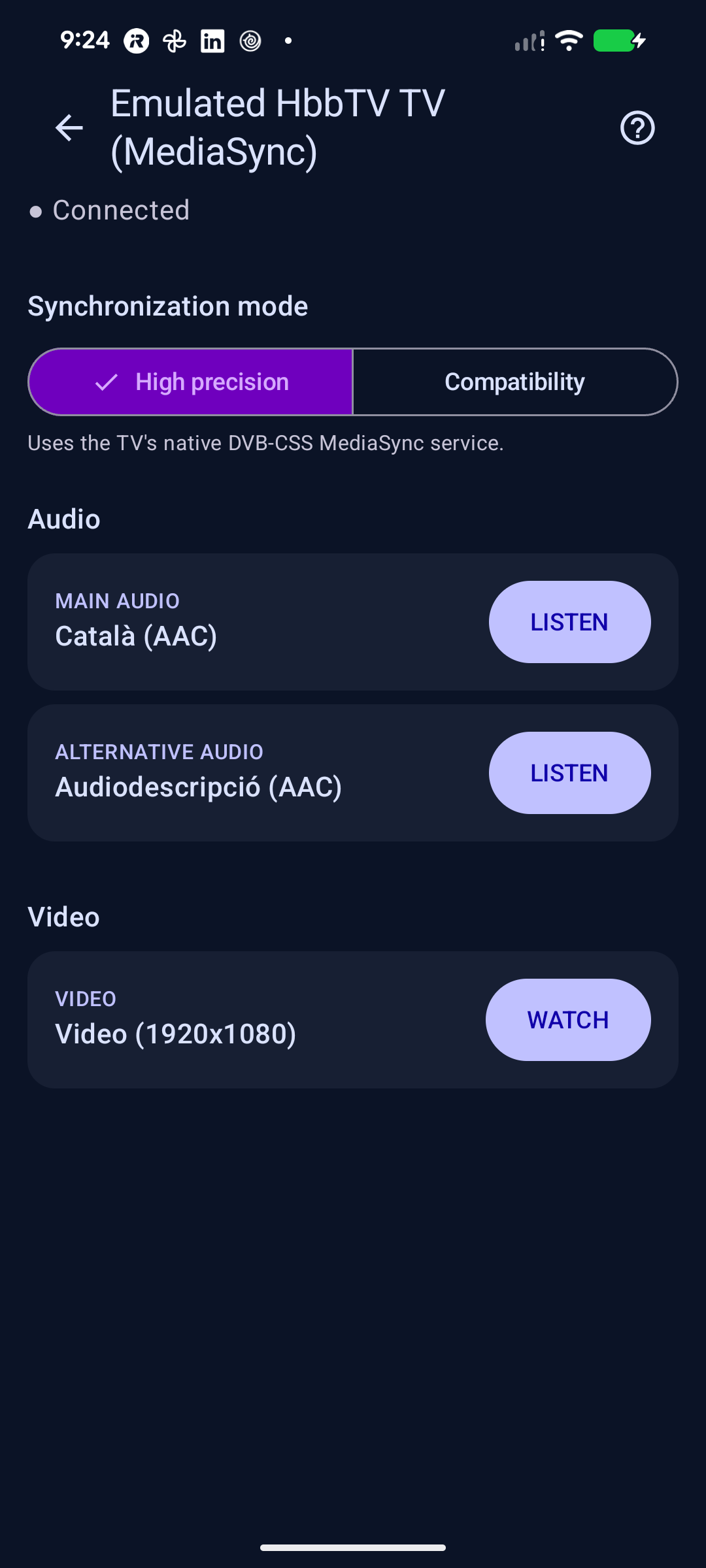
Step 3: Listen
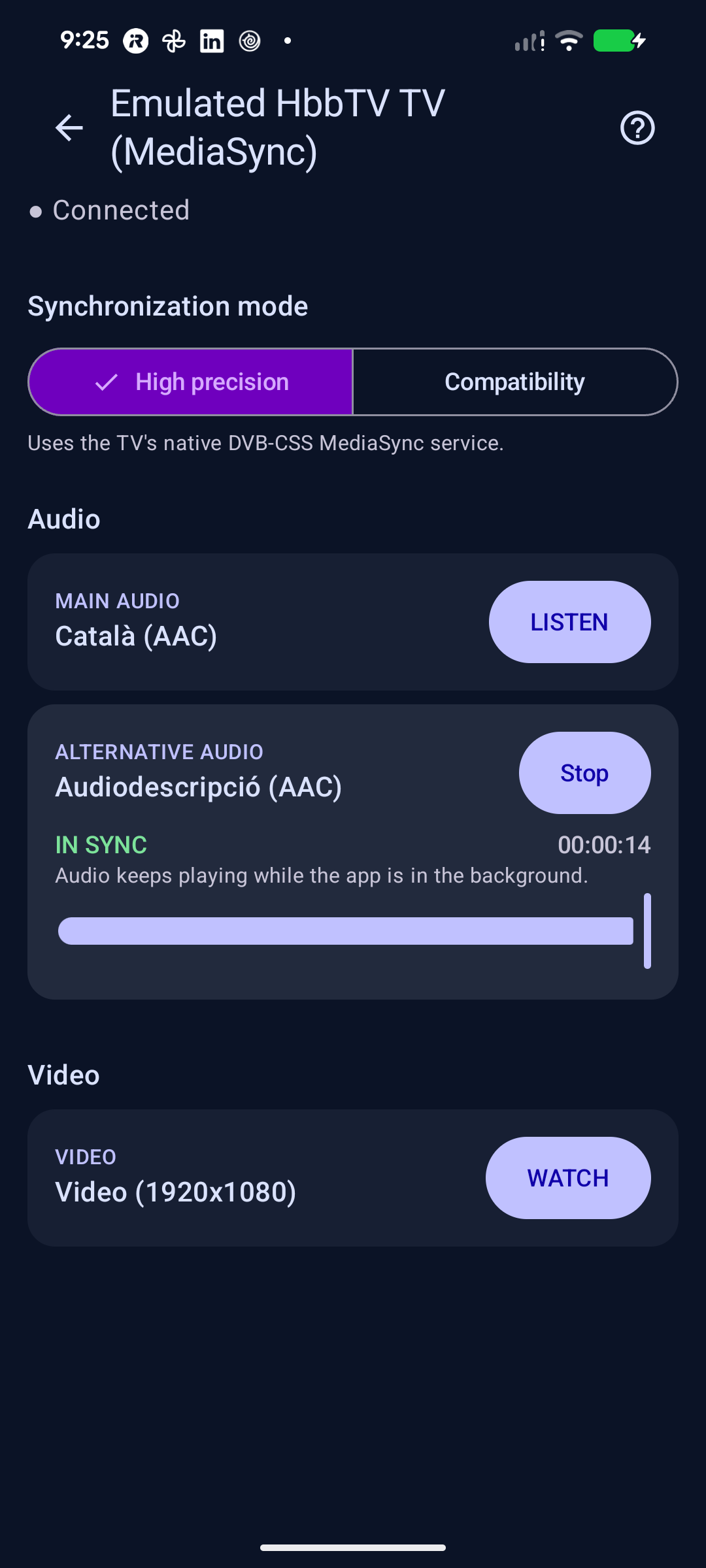
Step 3: Watch
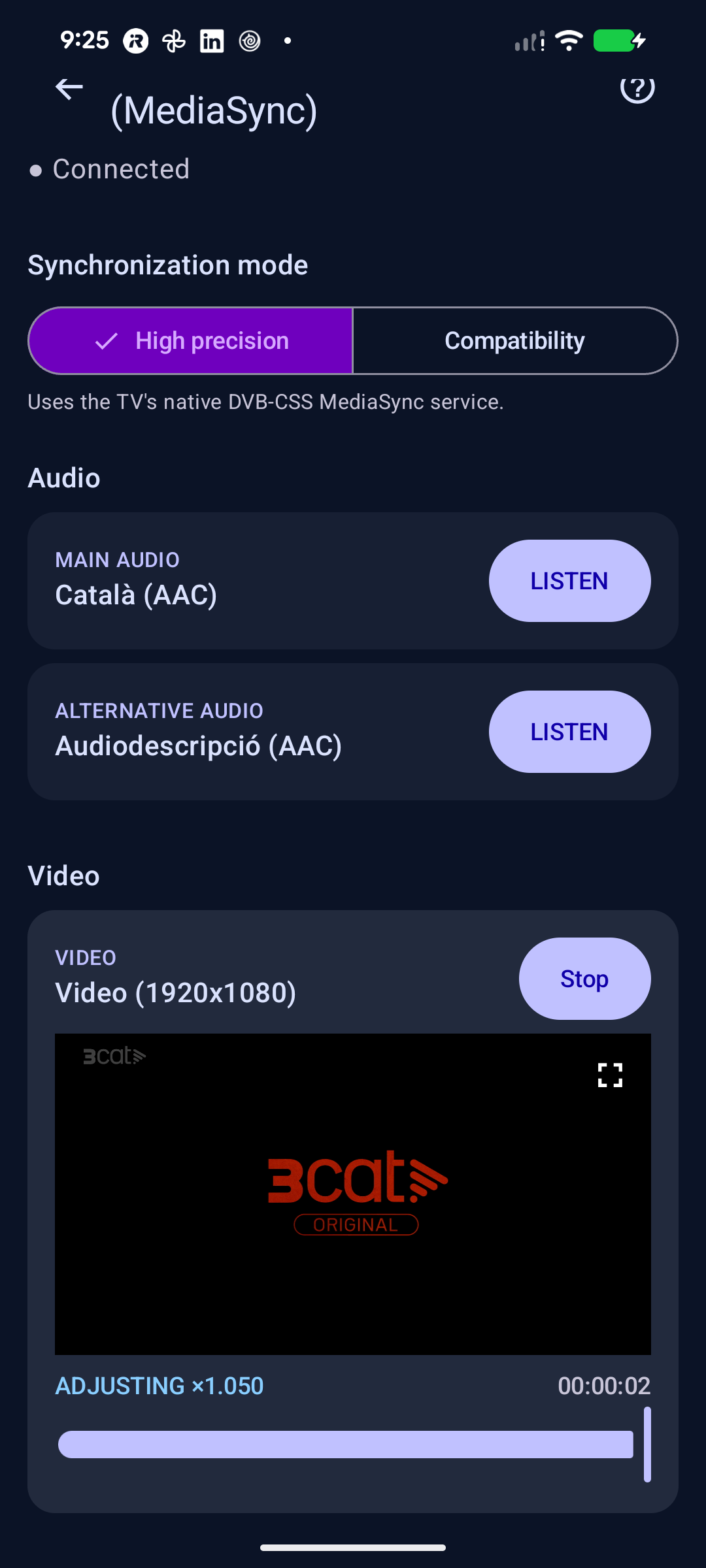
The app can offer alternative audio, additional video, sign-language video, subtitles or interactive web experiences synchronized with the programme, depending on what the broadcaster makes available.
Zero-Friction Deployment
Zero custom apps to build or maintain. Zero backend to run. Zero complex infrastructure to configure.
Broadcasters only need to add a lightweight HbbTV snippet that points to the companion content: a DASH MPD, an HLS playlist or a web page. The app handles the rest: it discovers the TV on the local network, loads the content, and synchronizes with the TV in real time.
The same MPD can also announce interactive web experiences, one per language if needed. They appear next to the audio and video tracks and receive the TV timeline when the viewer opens them.
<EventStream schemeIdUri="urn:3cat:ums:application:2026" value="1">
  <Event id="1" presentationTime="0">
    <ums:Application type="web" lang="en"
      url="https://apps.example.com/experience/"
      name="Immersive experience"/>
  </Event>
</EventStream>Use Cases: Unlocking Next-Gen Multi-Device Experiences
Demonstrate the practical value of HbbTV MediaSync by delivering seamless, personalized, accessible, and immersive services without any friction for the viewer.
Personalized Audio Experiences
- Private Listening
- Alternative Audio Languages
- High-Fidelity Audio
Universal Accessibility
- Alternative Audio Tracks
- Audio Description on Smart Glasses
- Sign Language on Second Screen
Home Mobility & Enriched Content
- Private Views & Continuity
- Alternative Camera Views
- XR & Next-Gen Ecosystems
Application Capabilities
Key built-in features engineered for seamless companion screen experiences.
Available in 7 Languages
The app interface comes pre-localized in 7 languages: Catalan, Spanish, Basque, English, German, Italian, and French.
Background Audio
Minimize the application or lock your device while keeping the fully synchronized audio track playing in the background.
Fullscreen Video
Expand complementary video tracks, alternative angles, or sign-language feeds into a fully synchronized fullscreen view.
Synchronized Web
Broadcasters can announce companion web experiences inside the DASH manifest, next to the tracks, or point the content ID straight to a web page. The phone opens it fullscreen and streams the TV timeline to it, so the page renders in perfect sync with the broadcast.
Subtitles & Accessibility
TTML and WebVTT subtitles from the manifest, with audio description and sign-language tracks clearly labeled. Controls are labeled for the TalkBack and VoiceOver screen readers.
Native Android & iOS
Built natively with Kotlin/Jetpack Compose and Swift/SwiftUI on a shared, tested protocol core. Choose between high-precision DVB-CSS and an App2App compatibility mode for TVs with an unreliable sync stack.
What happens under the hood?
MediaSync keeps discovery, manifest parsing, user choice, and playback timing in one continuous flow, so the companion device can render the right component at the same programme time as the TV.
The mobile scans for MediaSync devices
The app searches the local network for HbbTV terminals that advertise MediaSync capability.
The TV publishes the companion content
The HbbTV app enables MediaSync and shares which content the second device should receive: a DASH MPD, an HLS playlist or a web page. The app picks the most reliable sync transport the TV offers.
The mobile reads the manifest components
Once it receives the MPD, the app parses every available component: audio, video, subtitles, accessibility, language and role metadata, plus the web experiences announced in the manifest.
The user chooses what to watch or hear
Viewers select the component they need, from an alternate audio track to a sign-language video, subtitles or an interactive web experience.
DVB-CSS keeps playback within 20 ms
CSS-CII, CSS-WC, and CSS-TS endpoints align the second device to the TV timeline with less than 20 ms of delay.
Community Driven Innovation
Maintenance is open and community-driven. Any HbbTV member is welcome to propose and contribute new features to the core repository.
Pull Requests
Contribute bug fixes or new device discovery adapters.
Report Issues
Help us identify interoperability challenges across terminals.
Discussion
Join the HbbTV working groups to define the future of second-screen.
Frequently Asked Questions
Everything you need to know, whether you watch or you broadcast.
For Users
How do I use the app? expand_more
Which TVs are compatible? expand_more
My TV is not working — what can I do? expand_more
Which channels and services can I watch? expand_more
For Broadcasters
How do I activate the service? expand_more
What is supported right now? expand_more
How do I offer an interactive web experience? expand_more
EventStream with the scheme
urn:3cat:ums:application:2026 to your MPD, with one
Application type="web" per page and language. The app lists each one
next to the tracks; when opened, the page receives the TV position through
post-messages. If the experience is only a web page, you can also use its URL as the
content ID. See the
integration guide.
What if the TV's DVB-CSS implementation is unreliable? expand_more
hbbtv-compat script to your HbbTV application. It
serves the same sync protocol over the App2App channel, and the app uses it
automatically when the TV offers it. It also lets your TV application and the companion web page exchange
messages.